Fritz Kreisler (1875–1962)
Préludium and Allegro “in the style of Pugnani”
Wolfgang Amadeus Mozart (1756–1791)
Sonata No. 21 in E minor, K. 304
Allegro | Tempo di Menuetto
Igor Stravinsky (1882–1971)
Italian Suite (after Pulcinella)
Introduzione | Serenata | Tarantella | Minuetto e Finale
Béla Bartók (1881–1945)
Romanian Folk Dances
Jocul cu bâtă | Brâul | Pe loc | Buciumeana | Poarga românească | Mărunțel
Sergei Prokofiev (1891–1953)
March, from The Love for Three Oranges (1919)
Camille Saint-Saëns (1835–1921)
Danse macabre, Op. 40 (1874)
Manuel de Falla (1876–1946)
Seven Spanish Folk Songs (1914–1915)
El paño moruno | Asturiana | Jota | Nana | Canción | Polo
Heitor Villa-Lobos (1887–1959)
Bachianas brasileiras No. 5 – Aria (Cantilena)
Manuel de Falla (1876–1946)
Spanish Dance, from La vida breve
Evening ticket sales and accreditations
1 hour before the start of the concert
Duration of the concert
90 minutes (no intermission)
End around 9:30 pm
Price (CHF)
| Single category | 79.- |
| Young audience/Students/Apprentices | 10.- |
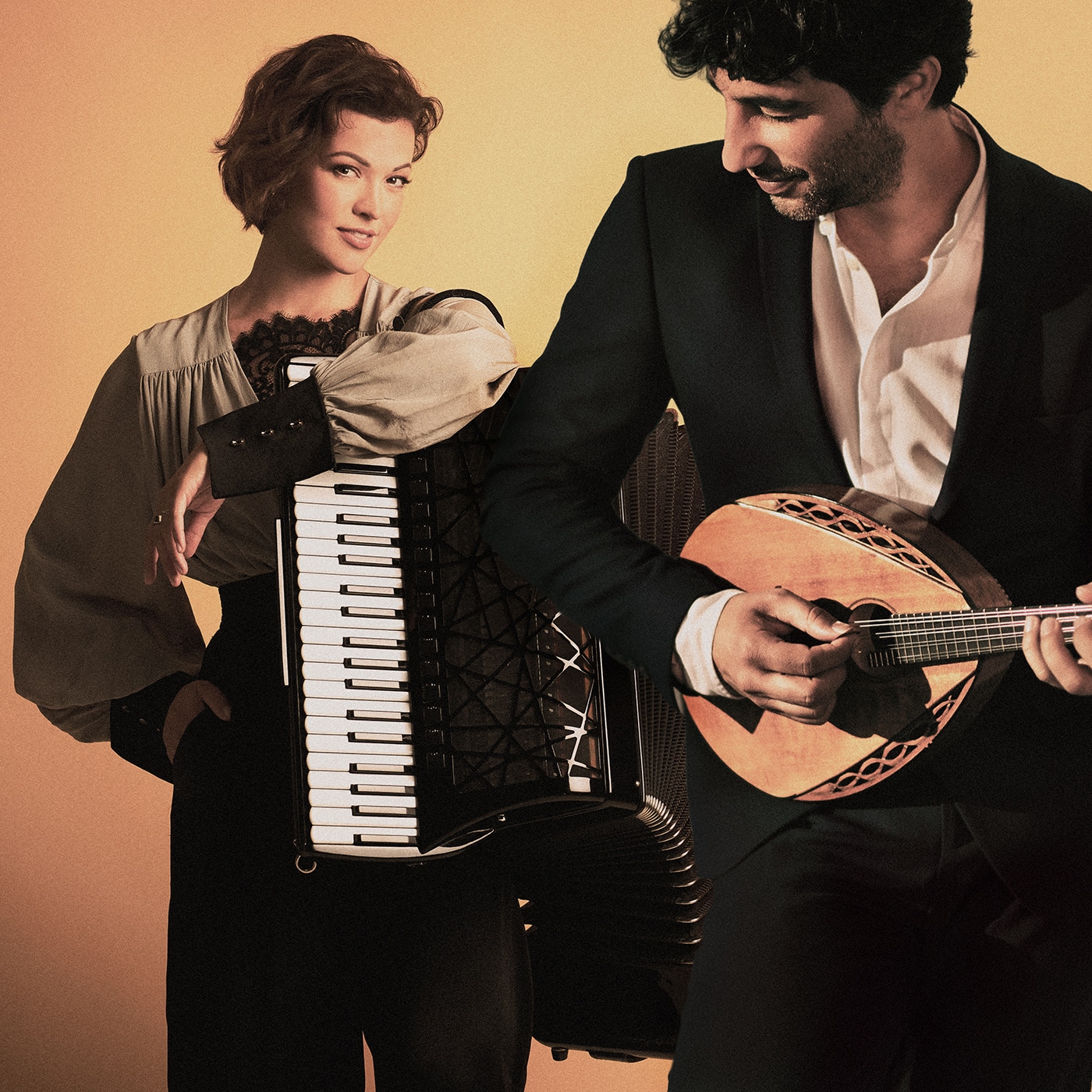
Avi Avital
“Here is a musician who recognizes no limits other than those of good taste and who has the art of persuading listeners to follow him everywhere.” — Gramophone
The first mandolin soloist ever nominated for a Grammy Award in the classical category, Avi Avital has often been compared to Andrés Segovia for his advocacy of his instrument and to Jascha Heifetz for his extraordinary virtuosity. Passionate and “with explosive charisma” on stage (The New York Times), he is one of the driving forces behind the revival of the mandolin. For more than twenty years, he has been reshaping both the history and the future of the instrument, bringing it to the world’s most prestigious concert halls.
At the same time, Avi Avital has greatly expanded the mandolin repertoire, not only through numerous transcriptions of diverse works but also by commissioning more than one hundred new pieces for the instrument, including mandolin concertos by composers such as Fazıl Say, Jennifer Higdon, Anna Clyne, Avner Dorman and Giovanni Sollima.
Born in Be’er Sheva in southern Israel, he began studying the mandolin at the age of eight and soon joined the youth mandolin orchestra founded and directed by his charismatic teacher, the Russian-born violinist Simcha Nathanson. He later studied at the Jerusalem Academy of Music and at the Conservatorio Cesare Pollini in Padua with Ugo Orlandi. Today he performs on a mandolin built by the luthier Arik Kerman.
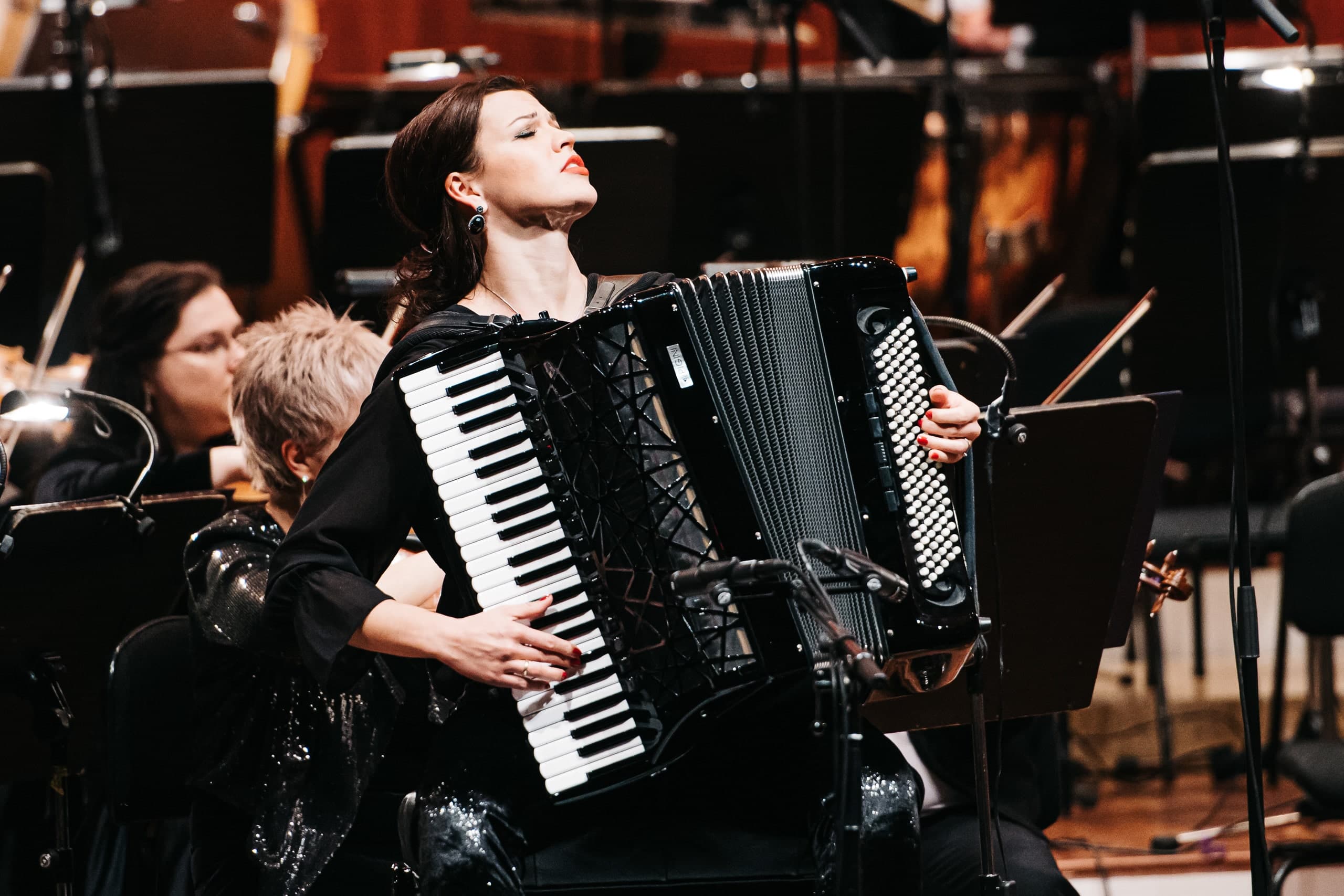
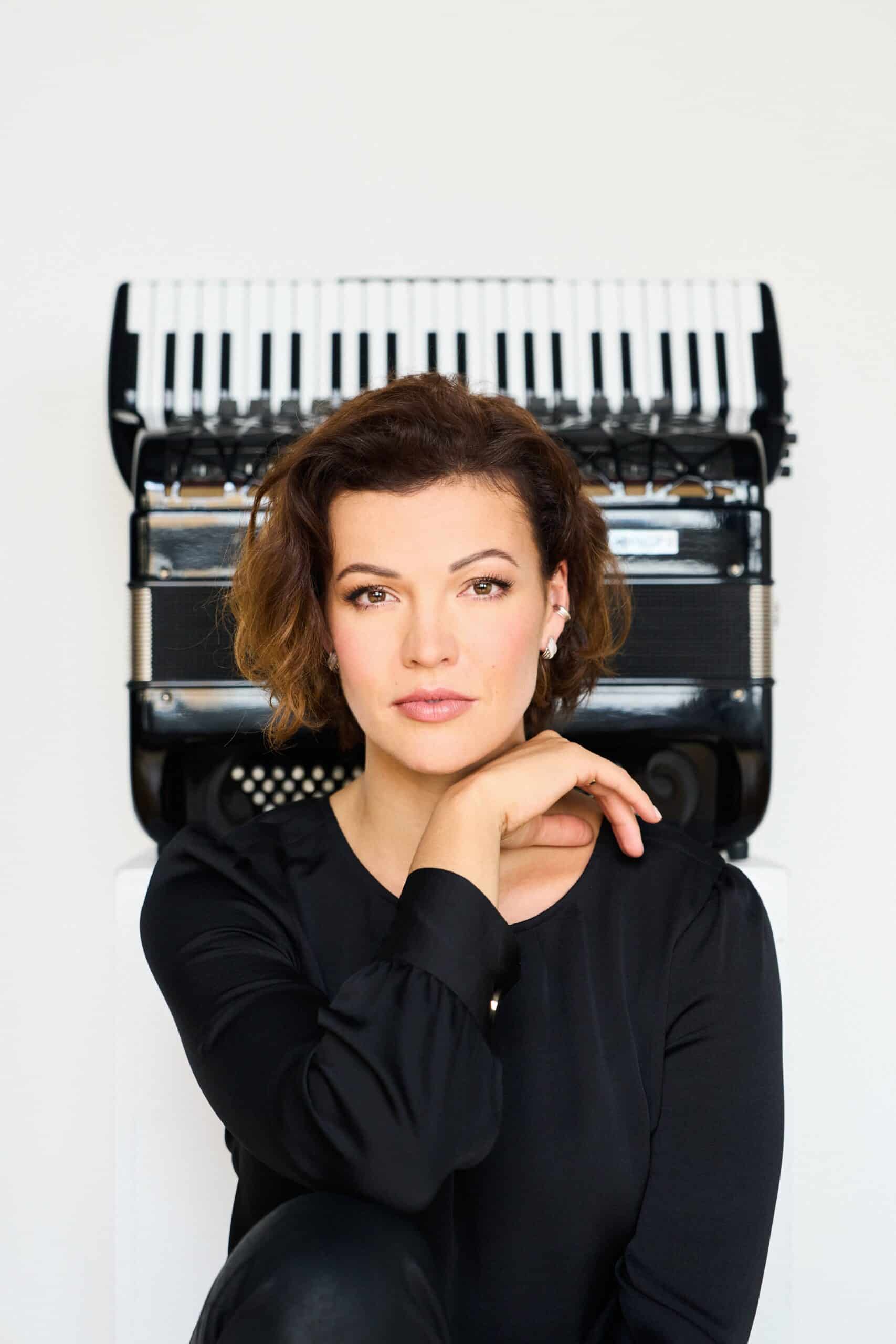
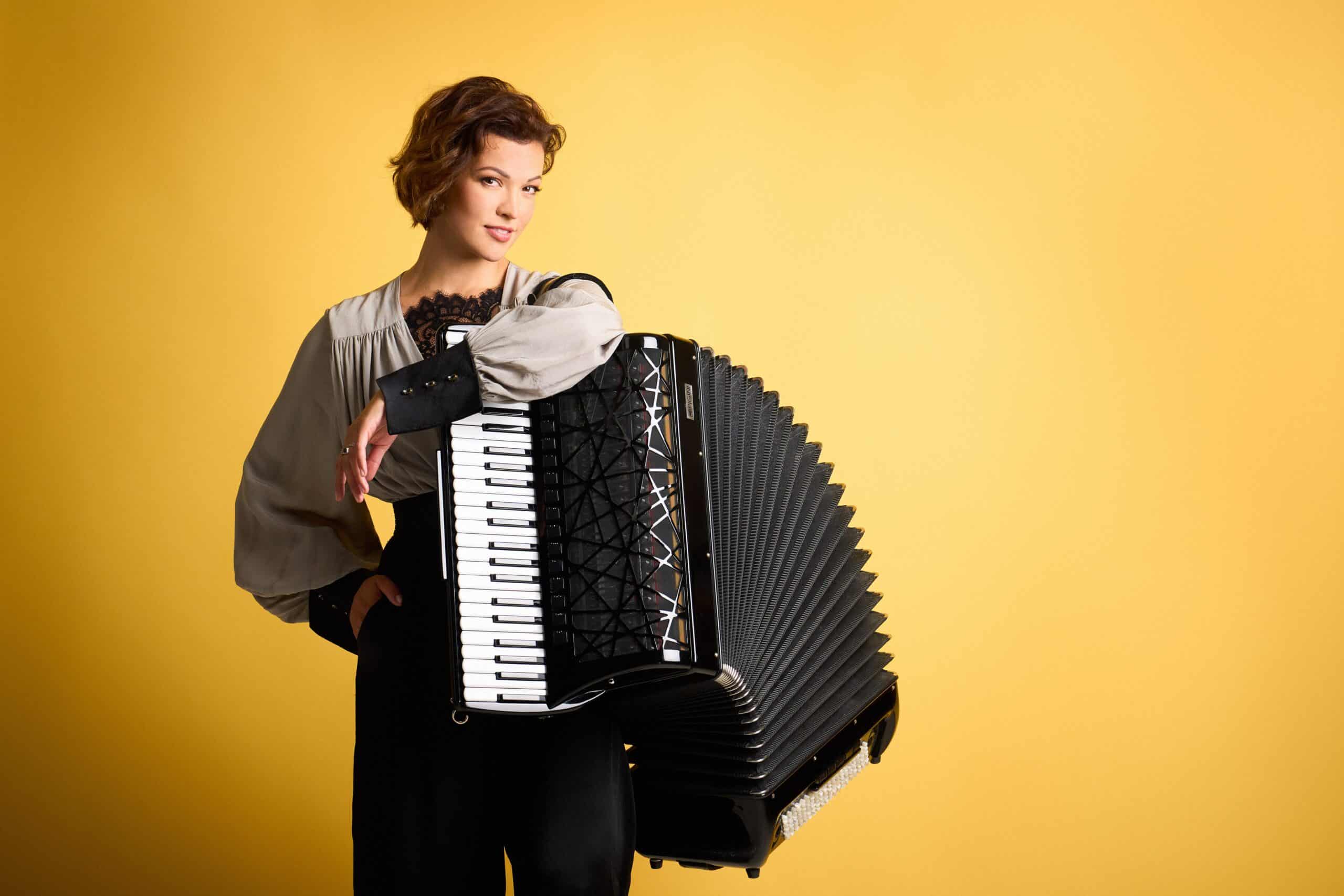
Ksenija Sidorova
Described as “revelatory” (The Telegraph) and “one of the most magnetic soloists you will ever see” (Seen and Heard International), Ksenija Sidorova is widely recognized as the leading ambassador of the classical accordion. Celebrated for her “verve, style, attitude and flawless virtuosity” (ZealNYC), she brings to each performance a captivating blend of technical brilliance and deep musical expressiveness.
Her repertoire spans more than three centuries of music and includes works by Johann Sebastian Bach, Astor Piazzolla, Erkki-Sven Tüür and Václav Trojan, alongside a growing number of contemporary works written especially for her. A passionate advocate of new music, Sidorova continues to expand the accordion repertoire through new commissions and collaborations. Fazıl Say is currently composing a new concerto for her, scheduled to premiere in July 2026 at the Schleswig-Holstein Musik Festival.
Born in Riga, Sidorova began playing the accordion at the age of six, inspired by her grandmother. She first studied with Marija Gasele before continuing her training at the Royal Academy of Music in London with Owen Murray. There she received numerous distinctions, including the Martin Musical Scholarship from the Philharmonia Orchestra, the Friends of the Philharmonia Award and the Silver Medal of the Worshipful Company of Musicians. She was named Associate of the Royal Academy of Music in 2016 and Fellow in 2021.